Home » Blog » Small-Space Storage » Small-Apartment Storage: How to Make Room to Live in NYC
Small-Apartment Storage: How to Make Room to Live in NYC
Your NYC apartment has a lot going for it. Space is usually not the thing. The bikes lean in the hallway, the off-season coats crowd the one good closet, and the folding table you use twice a year has quietly claimed a corner for good. If your place has slowly stopped fitting your life, you are in very good company, and there is a low-effort way out that does not involve renting a storage unit or borrowing a van.
Picture a snail with its shell: it carries a little extra home wherever it goes, out of the way and ready when needed. Making room works the same way. The things you are not using right now go somewhere safe, and the space you actually live in opens back up.
This guide is the map. It starts with why small feels normal here, walks through what to get out of the way and how to make room, and hands you off to a deeper guide for each thing you are wrestling with. If your first move is sorting what stays from what goes, start with how to declutter before you store.
Small-apartment storage, the quick version
Cramped is normal here: the median NYC home has about 3.9 rooms (U.S. Census). If your small apartment or studio has run out of room, make room without renting a unit: store what you are not using with valet storage that comes to you, picks up, keeps, and redelivers. This guide maps every fix.
In plain terms, the crowding is common, not a personal failing. The fix is not to own less or organize harder. It is to move what you are not using right now out of the apartment and into storage that handles the heavy part for you.
Below, you will find why small apartments fill up so fast, the make-room approach in plain English, a map of what to get out of the way and where each thing goes, how the no-lease flexibility works, and what making room actually costs.
Key takeaways
- Small apartments are the NYC norm. The median New York home has about 3.9 rooms, and most are in multi-unit buildings (U.S. Census), so a tight space is common, not a personal failing.
- You make room without renting a unit. With full-service valet storage, Summer picks up what you are not using, stores it, and redelivers it when you ask.
- No car, no hauling. Because pickup and redelivery are part of the service, there is no van to rent and no unit to drive to.
- No minimum term. Storage is month-to-month, so you store the in-between stuff for as long as you need and stop when you are done.
- You pay for your things, not a rough unit-size estimate. Summer prices storage from a written inventory of what you are actually storing, and every quote is free.
What's in this guide
- Why a small NYC apartment fills up so fast
- The make-room approach: store what you're not using now
- What to get out of the way (and where each thing goes)
- Storing the in-between stuff: no lease, no minimum
- What making room costs: the short version
- Is small-space storage right for you?
- Frequently asked questions
- Explore the rest of this series
Why a small NYC apartment fills up so fast
A small New York apartment fills up fast because there is not much apartment to begin with. As of the Census Bureau's 2019 to 2023 American Community Survey, the median New York City housing unit had about 3.9 rooms, and 83.5% of the city's housing units were in multi-unit buildings (U.S. Census Bureau). Compact homes stacked close together are the standard here, not the exception.
The building code backs that up. New York's housing code sets legal minimum room sizes: a primary living room must be at least 150 sq ft, and other rooms at least 80 sq ft (NYC Administrative Code §27-2074). Those are floors, not averages, so a perfectly legal bedroom can be genuinely small.
Here is the part worth hearing: none of this is a measurement of your specific apartment, and none of it is a personal failing. It is the honest backdrop to why the coats, the bike, and the boxes seem to close in so quickly. When rooms are small to start with, it does not take much to fill them. The good news is that the fix is not a bigger apartment. It is simply giving the things you are not using right now somewhere else to be.
The make-room approach: store what you're not using now
Making room in a small apartment means moving what you are not using right now out of your daily space and into storage, so the square footage you live in goes to the life you are actually living. It is a different move than organizing harder or throwing things out. You are not deciding to own less. You are deciding where the seldom-used things wait.
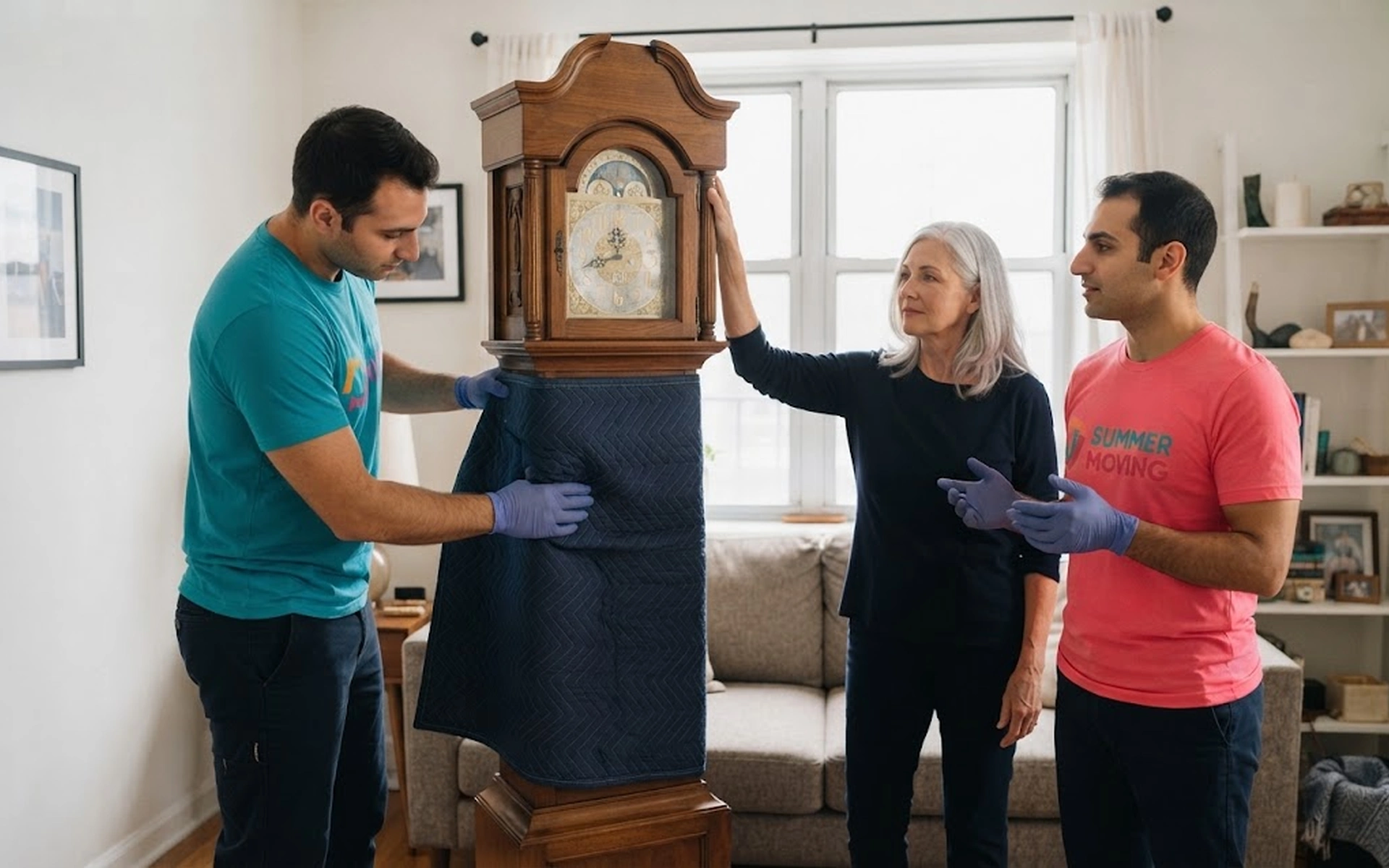
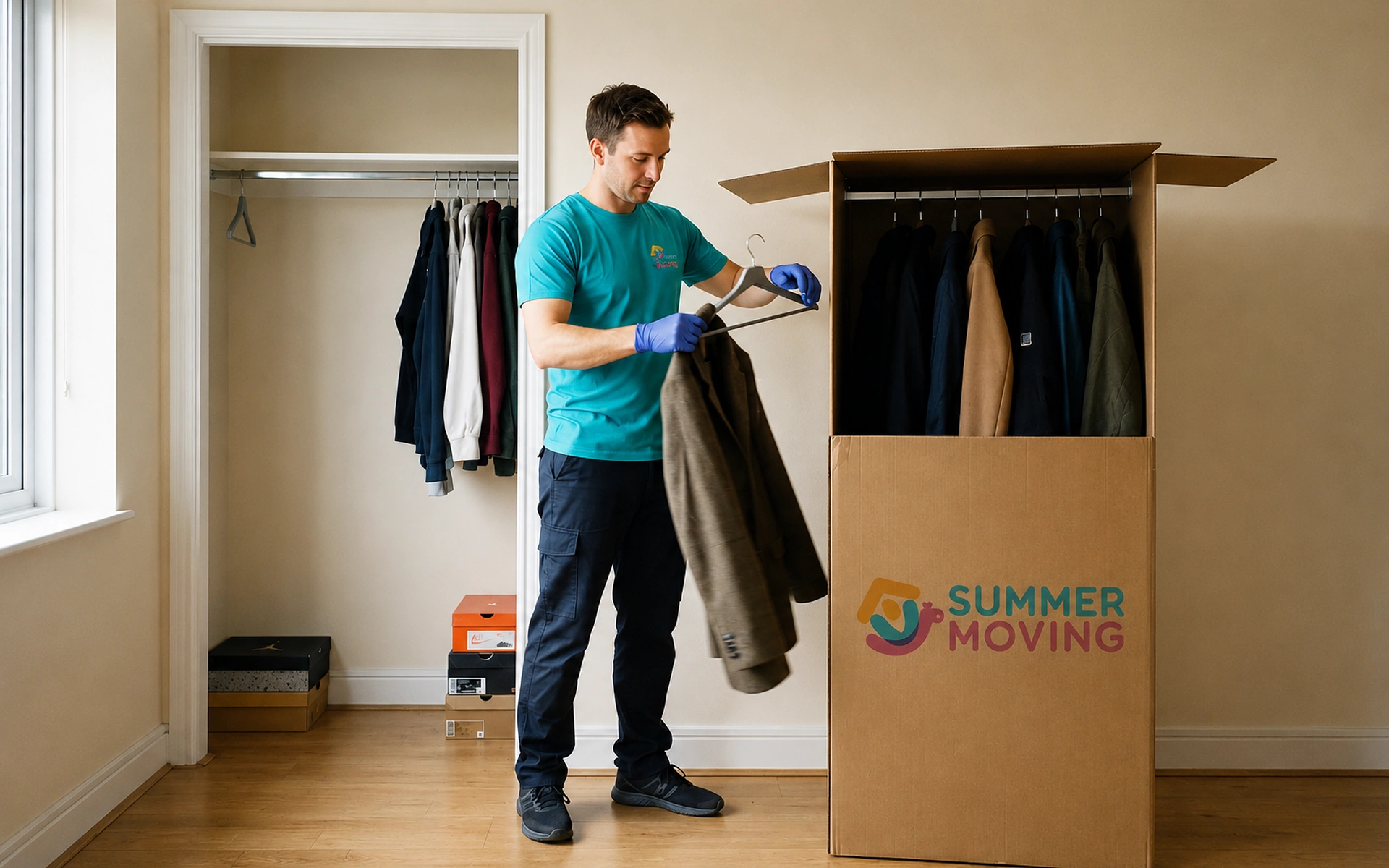
Here is how that actually works with Summer. You point at what you are not using: the winter coats in July, the bike you ride twice a month, the off-season boxes, the folding table you drag out for holidays. A crew comes to your door, wraps and loads all of it, and takes it away. It stays in storage until you want it. When you do want a piece back, you ask, and Summer redelivers it to you.
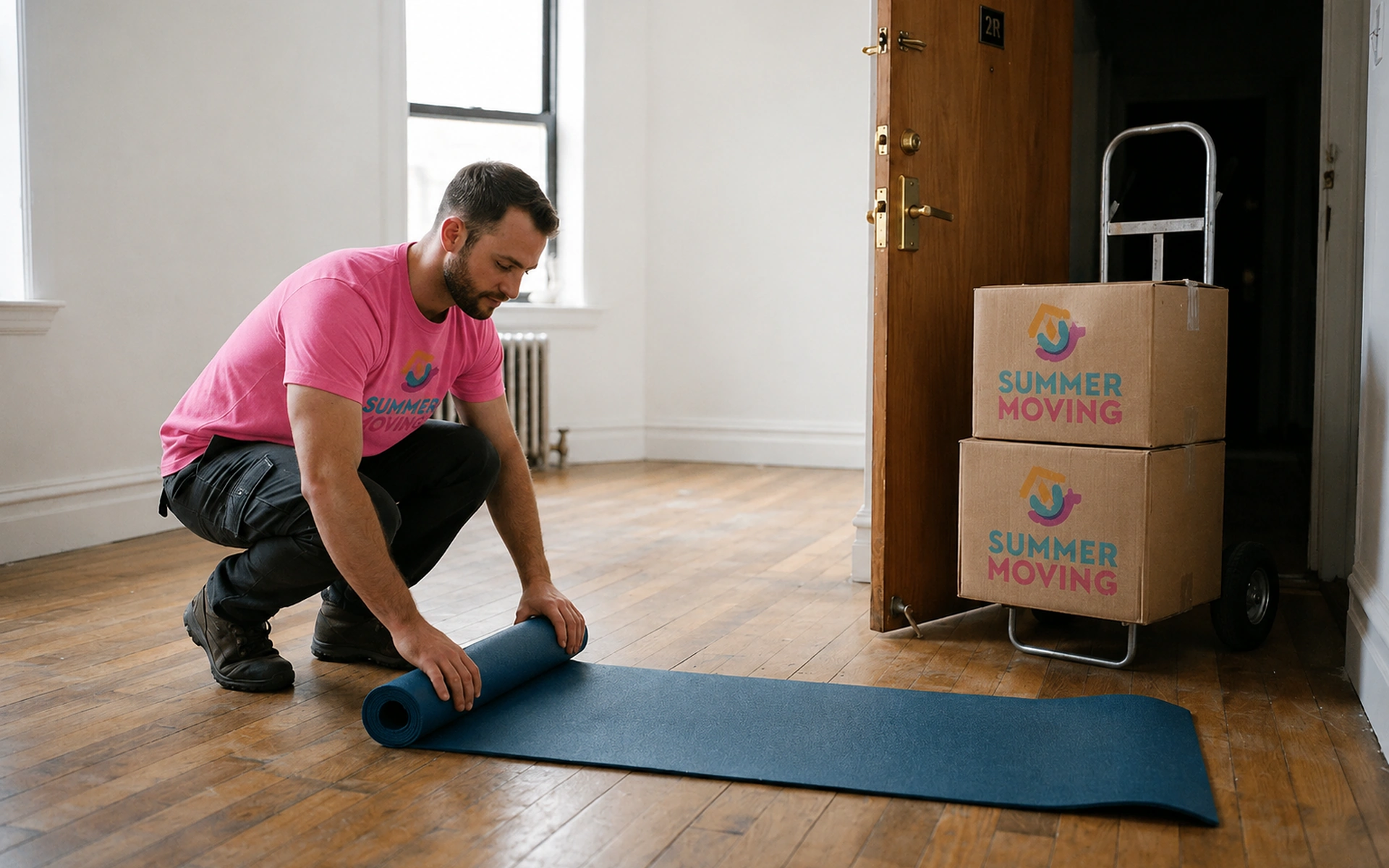
There is no self-storage unit to rent, no van to borrow, and no trip across a bridge on a Saturday. That is the whole loop, and you never touch a dolly.
If a service that comes and stores your things is a new idea, the category has its own primer worth a look. Start with new to full-service storage? start here. This guide keeps the focus on making room in a small space; that one explains the category itself.
What to get out of the way (and where each thing goes)
The fastest way to make room is to move out the things you own but rarely touch, and in a small NYC apartment those tend to fall into a handful of familiar piles. Here is the map. Each pile has its own guide with the specifics; this hub just points you to the right one.
- Furniture you love but cannot fit right now. The extra dresser, the guest chairs, the table that only earns its space at Thanksgiving. See furniture storage for a small apartment.
- A bike with nowhere to live. When the hallway and the apartment have both run out of room for it, there is a better spot than the radiator. See bike storage when your building has no room.
- The season you are not living in. Winter coats in July, the fan and the AC in January, the gear for the sport that is out of season. See off-season and seasonal item storage.
- The studio keep-or-store question. When every square foot counts, some things earn their place and some should wait in storage. See what to store vs. keep in a studio.
- The stuff you cannot part with but have nowhere to put. Before you move anything, it helps to sort. See how to declutter before you store.
- An apartment sitting empty while you travel. A long trip or a sublet is a natural time to store what you are leaving behind. See storing your stuff while you travel.
- A move to a smaller place. Downsizing means deciding what to keep close and what to store for now. See downsizing in the city.
- A room that needs to become a nursery. Clearing space for a baby means storing what the room held before. See making room for a nursery.
Whatever the pile, the move is the same: store what you are not using now with a service that comes to you, and get it back when you want it.
Storing the in-between stuff: no lease, no minimum
Making room does not mean a long commitment: Summer storage has no minimum term and bills month to month, so you can store the in-between stuff for a few weeks or a few seasons and stop when you are done. That matters in a small apartment, because a lot of what crowds you is not gone-forever clutter. It is maybe-later things and seasonal things that just need somewhere to wait.
Store the winter gear until winter. Store the guest bed until guests come. Store the boxes you are not ready to sort while you decide, without a year-long lease hanging over the decision. When you want any of it back, you ask, and it comes back.
Two of those in-between moments have guides of their own. If you are storing because you are leaving town for a while, see storing your stuff while you travel. If you are storing the maybes while you sort keep from let-go, start with how to declutter before you store.
What making room costs: the short version
Storage for a small apartment does not come with a single sticker price, because the honest cost depends on what you store and for how long you keep it. A few boxes and a bike is not the same as a bedroom's worth of furniture, so it should not cost the same.
Here is how Summer builds a real number instead of a guess. We do not start with a unit size and ask you to fill it. We start with your things. The bike, the winter coats, the six boxes from the hall closet, the folding table: those go on a written inventory, and your price is built from that list. You pay for the space your specific things take, not a standard unit you would overpay to fill with empty air.
Every quote is free, and it starts with that quick inventory. There is nothing to sign to find out what making room would cost, and because storage is month to month, you are never locked into space you have stopped needing.
Is small-space storage right for you?
A quick gut-check. The more of these sound like you, the more small-space storage is worth a look:
- ☐ Your apartment has stopped fitting your life, and you want the space back.
- ☐ You would rather not rent a storage unit or borrow a van.
- ☐ The things crowding you are seasonal or maybe-later, not gone-forever.
- ☐ You want a real, written-inventory quote before you commit, not a rough estimate.
- ☐ You would like your things to come to you and come back to you, without the hauling.
If you would rather keep everything within arm's reach and visit it yourself, a unit you drive to may suit you better, and that is a fair trade, not a knock.
Frequently asked questions
How do you make room in a small NYC apartment?
You make room in a small NYC apartment by moving what you are not using right now out of your daily space and into full-service storage that comes to you. Summer picks up the items, stores them, and redelivers them when you ask, so there is no self-storage unit to rent, haul to, or visit.
What should I put into storage to free up space?
Start with the things you own but rarely use: furniture you cannot fit right now, a bike with nowhere to live, off-season clothing and gear, and the room a nursery or a downsizing move needs to clear. Each of those has its own guide in this series, and the rule of thumb is to store what is not earning its square footage today and keep what you use every week.
Do I have to rent a storage unit to make room?
No. With full-service valet storage there is no unit to rent, drive to, or visit. Summer comes to your door, takes what you want stored, and brings it back when you ask.
Is there a minimum commitment for storage?
There is no minimum term. Summer storage is month-to-month, so you keep it as long as you need and stop when you are done. That makes it easy to store the in-between and seasonal things without a long lease.
How much does storage cost for a small apartment?
There is no single sticker price, because Summer prices storage from a written inventory of what you are actually storing. Every quote is free, so you get a real number built from your things rather than a rough unit-size estimate.
How small is a typical NYC apartment?
New York apartments are genuinely compact. As of the Census Bureau's 2019 to 2023 American Community Survey, the median NYC housing unit had about 3.9 rooms, and 83.5% of the city's housing units were in multi-unit buildings (U.S. Census Bureau).
Can I get my things back whenever I want?
Yes. Redelivery is part of the service: when you want any item back, you ask and Summer brings it to you. You can bring home the winter coats for the season or the whole lot when you move, on your schedule.
The bottom line: small is the norm, and making room is the easy part
A tight New York apartment is not a personal failing. Most homes here are compact, so the goal is not to own less or organize harder. It is to give the things you are not using right now somewhere else to be. Full-service valet storage does exactly that: Summer picks it up, keeps it, and brings it back when you ask, with no unit to rent and no van to borrow.
It is month-to-month with no minimum, and it starts with a free quote built from a written inventory of your actual things. If you are just setting up a first NYC apartment, building in a little breathing room from the start beats scrambling for it later. Whatever is crowding you, there is a guide above for it, and a simple way to make room to live.
Ready to make room to live?
Your apartment can only hold so much before it starts running you instead of the other way around. Making room hands the heavy part to someone else: Summer picks up what you are not using, keeps it safe, and brings it back the moment you want it. Every quote is free, and it starts with a quick inventory of what you would love to get out of the way.
Most of this guide is Summer's own service practice, stated plainly, so our first-party facts need no outside citation. The two public facts about New York's small spaces are attributed to their sources:
- U.S. Census Bureau: as of the 2019 to 2023 American Community Survey, the median NYC housing unit had about 3.9 rooms, and 83.5% of the city's housing units were in multi-unit buildings.
- NYC Administrative Code §27-2074: New York's housing code sets legal minimum room sizes of 150 sq ft for a primary living room and 80 sq ft for other rooms.
Colby Ryder, Author. Colby Ryder is a copywriter with six years of experience creating content for home-service providers, moving and storage companies, and SaaS businesses. He specializes in research-driven, SEO-focused content and has written service pages, blog posts, guides, landing pages, and informational articles for businesses across these industries. His work combines thorough research with clear, practical writing designed to help readers find useful information and take action.
Otto Chek, Editor. Otto Chek is an AI content editor. Before a post reaches the human reviewer, he matches every claim to the source it was approved from, measures the draft against the editorial standards, scores it, and sends back a verdict. Rewriting the post and approving it for delivery are never his job: those stay with a human reviewer.
Reed Marks, Reviewer. Reed Marks is a senior editor with nine years of experience across editing, content review, fact-checking, and editorial quality assurance. His academic grounding is a Journalism bachelor's degree followed by a Professional Writing master's. His experience spans a wide range of industries and content types, giving him a broad perspective on accuracy, clarity, and editorial standards. He provides a final human review of each piece before publication, checking claims for accuracy, confirming that sources support the information presented, and ensuring the content meets standards for readability, SEO, and brand alignment.
Reviewed on this post: Reed Marks confirmed the small-space data (the Census room figures and the housing-code minimum room sizes) is stated exactly and attributed to its source. He also checked that each Summer service detail stays accurate and never overstated, with no storage price, no coverage claim about stored goods, and no tenure claim anywhere in the piece.
This guide is the hub. Each deeper guide below links back up to it.
- Furniture storage for a small apartment: where to send the couch, dresser, or table you love but cannot fit right now.
- Bike storage when your building has no room: what to do when the hallway and the apartment have both run out of space for it.
- Off-season and seasonal item storage: store the season you are not living in and get your closet back.
- What to store vs. keep in a studio: a keep-or-store method for when every square foot counts.
- Declutter before you store: a gentle keep, store, or let-go sort before you move anything.
- Storing your stuff while you travel: what to do with your things when the apartment sits empty or you sublet.
- Downsizing in the city: what to keep close and what to store when you move to a smaller place.
- Making room for a nursery: clear a room for the baby by storing what it held before.